Deep Dive: Media Tek
MediaTek has tripled in a year to the highest earnings multiple in its history, and the entire re-rate rests on a Google relationship the company has never confirmed. Here is what MediaTek really does

On October 15, 2025, MediaTek was allowed to put its own name on a sentence about somebody else’s chip. The press release went out on the wire: the new NVIDIA DGX Spark features the GB10 Grace Blackwell Superchip, co-designed by MediaTek. Co-designed. With NVIDIA’s blessing, for anyone to quote.
There is no equivalent sentence about Google.
The relationship that actually moved this stock, the one where MediaTek is said to be designing silicon for Google’s TPU, has never been printed by Google or by MediaTek. Reuters reported it in March 2025, and Broadcom’s stock fell on the news. The Information described the scope. Google has not named MediaTek. MediaTek has not named Google. Google’s own TPU materials still credit Broadcom.
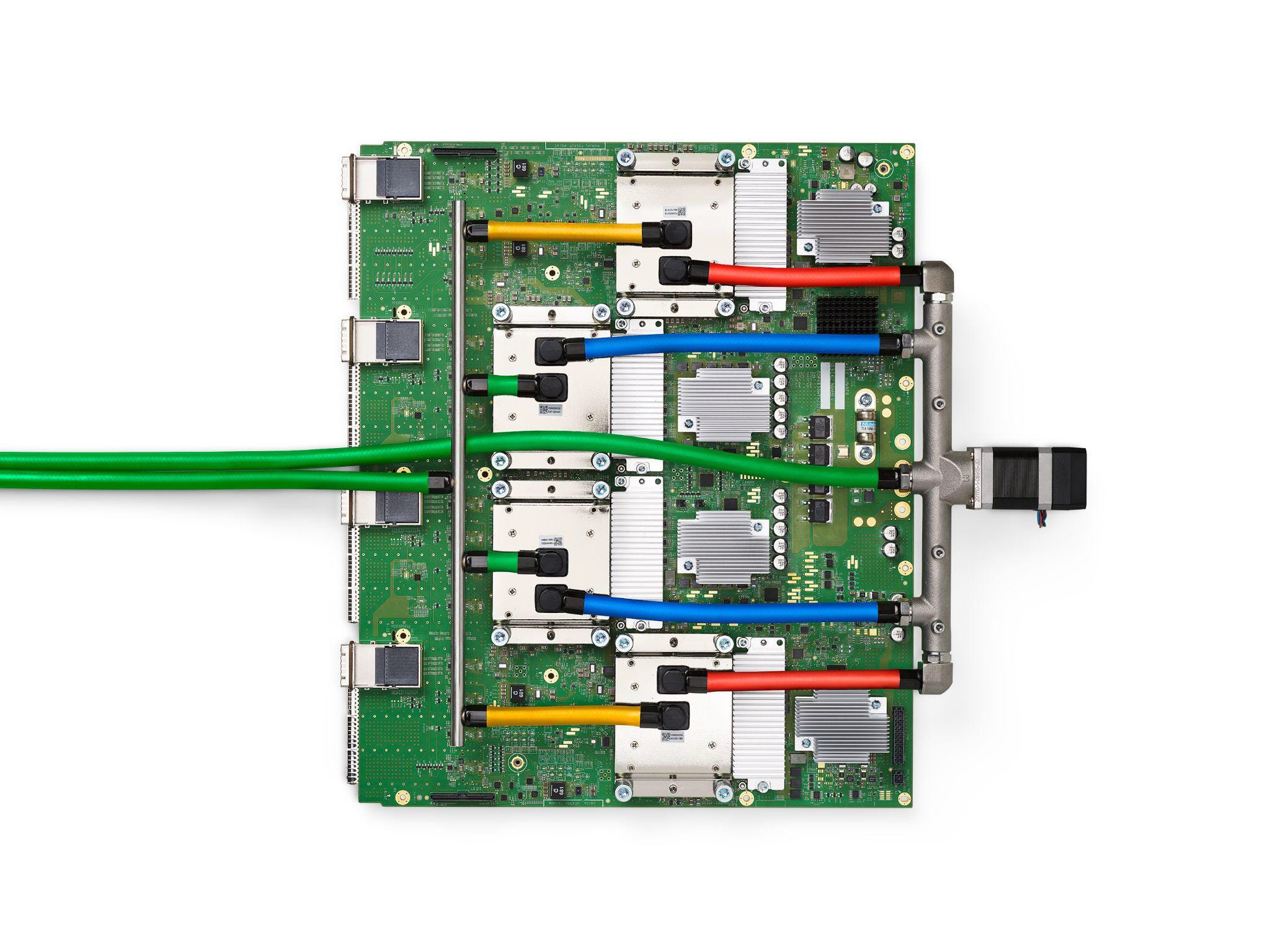
A Google Tensor Processing Unit. MediaTek is reported to design the input/output die on a later generation, and that single report, never confirmed by Google, is most of why the stock tripled. Image: Google, Wikimedia Commons (CC BY 4.0).
The market did not wait for the sentence. MediaTek closed May at about NT$4,310, a market value near US$219 billion, up roughly 233 percent in a year and about 3.8 times its November low. On May 7 the Taiwan exchange curbed trading in the name as the cap pushed past US$165 billion. The stock changes hands at roughly 68 times trailing earnings, against a ten-year median near 19. It has never been this expensive.
What MediaTek is reported to design on Google’s chip is the input and the output. The high-speed interfaces. The die around the edge. Not the processor that does the math.
The job in this piece is to separate the sentence MediaTek is allowed to print from the one the market has already priced, and then to ask what is left.
The thesis in one paragraph
Forensic view, skeptical lean, and not a hard short. MediaTek trades at roughly 68 times trailing earnings and 56 times forward, the most it has ever cost on earnings, against a decade median near 19 and a prior peak near 49. The entire re-rate is one story. On April 30, 2026, management doubled its 2026 custom-ASIC revenue target to about US$2 billion, raised the addressable market it cites to US$70 to 80 billion by 2027, and held to a 10 to 15 percent share ambition. Goldman Sachs is reported to model that line going from about US$2 billion in 2026 to US$12.3 billion in 2027, roughly 39 percent of the company. The market has decided MediaTek is an AI-silicon company, and it has decided it in advance. The problem is that the marquee piece of the story is reported, not confirmed: the Google TPU work that drove the biggest moves in the stock has never been acknowledged by either party, the scope of it is the I/O die and the interfaces rather than the processor, and Google made engineering changes to a later TPU that pushed a tape-out into mid-2026. The one data-center relationship that is confirmed, NVIDIA’s GB10, is real and small. So the lean: the franchise is genuinely good and the asset is real, but the price has already underwritten the rumored half being confirmed and scaling to a third of the company, at margins nobody has disclosed, with no stumble, while the core business just printed record revenue and flat profit at a gross margin ten points below Qualcomm’s. You do not naked-short a parabolic name with a confirmed NVIDIA tie-in and net cash into the largest capex cycle the industry has run. You read the gap. The sum-of-parts in the body shows the legacy business carrying almost none of the valuation, and the implied ASIC business priced as if Google had already signed. Position, construct, and dated kill criteria are at the end. The watch list is led by tomorrow.
The company at NT$4,310
Start with what you are buying, because the answer is mostly not the thing in the headlines.
MediaTek is a fabless semiconductor company, headquartered in Hsinchu, Taiwan, listed in Taipei under the ticker 2454. Fabless means it designs chips and pays someone else to build them. That someone, almost entirely, is TSMC, twenty minutes up the road in the same science park. MediaTek owns no fabrication plants, carries no fab capital, and lives or dies on two things: the quality of its designs, and its access to TSMC’s leading-edge capacity. Hold the second one, because it turns out to be the hinge of the whole ASIC story.
A word on how MediaTek got here, because the history explains the present. The company was spun out of the foundry UMC in the late 1990s, made its name first in optical-disc-drive chips, then in the feature-phone reference designs that put a cheap mobile phone in every hand across China and India, then in the smartphone era as the default chip for the vast non-Apple, non-premium middle of the market. The through-line never changes: take a category the leaders treat as premium, drive the cost and the integration until a capable part is affordable, and win on volume. The ASIC pitch is that same playbook aimed at the data center, which is either the most natural extension of MediaTek’s history or a reach too far from its consumer roots, depending which way you lean. The fabless model is the enabler. With no fabs to fill, MediaTek can follow the design talent and the TSMC capacity wherever they lead, and it earns the high incremental margin of a company that sells designs rather than buildings, which is most of why it can carry net cash above NT$180 billion while spending a fifth to a quarter of revenue on research.
At about NT$4,310 and roughly 1.60 billion shares, the market capitalization is near NT$6.88 trillion, or about US$219 billion. The balance sheet is pristine. Cash and equivalents sit above NT$200 billion against almost no debt, so net cash on the order of NT$180 billion or more depending on how you treat the short-term investments. Enterprise value, then, is a little below the market cap, near NT$6.7 trillion. Hold that number too. Most of this piece is about how to split it.
The company runs in three reported segments. Mobile Phone, the smartphone systems-on-chip and the modems inside them, is the largest, somewhere in the mid-50s percent of revenue depending on the quarter and the flagship cycle, swinging up toward 59 percent in a fourth quarter when the new flagship ships and back toward the high-40s in a soft first quarter. Smart Edge Platform, which holds the smart-TV chips, the Wi-Fi and connectivity franchise, the Chromebook and IoT and automotive silicon, and now the data-center ASIC effort, runs in the low 40s and grows faster. Power IC is the small remainder, around 5 percent. The labels have shifted over the years, the old “Smart Home” and “Connectivity” buckets folding into Smart Edge, but the shape is stable: a smartphone-chip company with a large and faster-growing edge business attached, and a brand-new data-center experiment buried inside the edge line.
The chief executive is Rick Tsai, and his resume matters more than usual here. He ran TSMC as chief executive, then ran Vanguard, the foundry affiliate, before taking the top job at MediaTek. The reported MediaTek role on Google’s TPU includes acting as a liaison to TSMC for the build and the quality control. A company run by a former TSMC chief executive, sitting in the same science park, being hired to manage the TSMC relationship on somebody else’s chip, is not an accident. It is the single most credible part of the data-center pitch. Tsai is also careful, on every earnings call, to tell investors to take the long view on the data-center business and to expect the bulk of the 2026 ASIC revenue only in the fourth quarter. Hold that, because the multiple is not taking the long view.
The financial headline of the last year is a contradiction the rest of the piece keeps returning to. Fiscal 2025 was a record for revenue, NT$595,966 million, up 12.3 percent, roughly US$19 billion. And net income was NT$106,118 million, down 1.0 percent. Record top line, flat-to-lower profit. The gross margin that used to flirt with 48 to 50 percent settled around 47.5 percent for the year and is guided closer to 46. A company growing revenue double digits while earnings go nowhere is a company whose mix is getting cheaper or whose costs are getting dearer, and in MediaTek’s case it is both, which the financials section takes apart.
One smaller fact tells you how management reads its own situation. For four straight years, 2021 through 2024, MediaTek paid a special cash dividend, NT$16 per share, on top of its regular payout. That special program has ended. There is no special dividend for 2025 or 2026. A company about to spend heavily to chase a new growth business, and wanting to keep its powder dry, stops handing back the extra cash. That is a reasonable decision. It is also a tell about where the capital is going, and about how sure management is that it will need it.
So: a fabless chip designer with a fortress balance sheet, three segments dominated by a mature smartphone business, a foundry relationship that is its single biggest operating advantage and is run by a man who used to run the foundry, a careful chief executive selling a data-center future, and an enterprise value of NT$6.7 trillion that the next ten sections are going to pull apart. Before any of the valuation, though, you need to know what the company actually makes, because the gap between what it makes and what it is priced for is the whole story.
What MediaTek actually sells
For most of its history MediaTek was the company that made the good-enough chip. Not the best chip, the chip that let a Chinese handset maker build a capable phone at a price the premium vendors could not touch. That reputation is now a decade out of date, and you cannot understand the stock without seeing why.
Start with the flagship, because the flagship is where the reputation changed. The Dimensity 9500, launched in September 2025, is built on TSMC’s N3P process and carries about 30 billion transistors. Its CPU is the first to ship on Arm’s new C1 core generation, the design Arm markets as Lumex: one C1-Ultra core running at 4.21 gigahertz, the first MediaTek core past 4 gigahertz, three C1-Premium cores, and four efficiency cores. The graphics are Arm’s Mali-G1-Ultra with hardware ray tracing. And the part that matters most for the AI story on the phone is the NPU, the neural processing unit, MediaTek’s ninth-generation design, rated near 100 trillion operations per second, with a compute-in-memory block bolted on to run the small always-listening models without waking the main cores.
If you do not live in mobile silicon, here is why the NPU matters. A modern phone runs a growing share of its AI on the device rather than in the cloud: the photo cleanup, the live translation, the voice assistant, increasingly a small language model answering without a round trip to a data center. The NPU is the block that does that work at a power budget a battery can survive. The CPU thinks in general, the GPU draws, and the NPU runs the neural networks. MediaTek’s bet, and Qualcomm’s, and Apple’s, is that on-device AI is the next reason to upgrade a phone, and the NPU is where that fight is fought. The Dimensity 9500 can run on-device image generation and roughly double the token-generation rate of the prior generation, which is the kind of spec that sells a phone in 2026.
The thing to register is that MediaTek’s flagship is now genuinely competitive at the top. Independent benchmarks put the Dimensity 9500 ahead of Qualcomm’s Snapdragon 8 Elite Gen 5 on single-core CPU, 4,007 to 3,831 on Geekbench 6, behind it by a hair on multi-core, ahead by a wide margin on sustained graphics in 3DMark, and running cooler. That is parity, and parity at the premium tier is a structural change from the company that used to live in the mid-range. The flagship Dimensity line did more than US$3 billion in revenue in 2025, growing more than 40 percent. MediaTek is Arm’s first announced CSS-for-Client licensee, the lead customer for Arm’s packaged core-and-graphics designs, the same Arm relationship I wrote about from the licensor’s side. And the next flagship, the Dimensity 9600, is already taped out on TSMC’s 2-nanometer node, which makes MediaTek one of the first wave of N2 customersalongside Apple, AMD, and NVIDIA.
A MediaTek Dimensity system-on-chip. This is the product that is most of the revenue and almost none of the re-rating. Image: MediaTek, Wikimedia Commons (CC BY-SA 4.0).
Below the flagship sits Helio, the older mainstream line, which is a harvest business now, refreshed slowly and milked for cash. That is fine. Not every product needs to be new. The scale underneath all of it is the thing people forget: MediaTek ships on the order of two billion chips a year across all its lines, and it is the number-one smartphone-SoC vendor in the world by units. Volume is the moat the mid-range built.
The part of MediaTek almost nobody outside the industry knows about is the one where it is not the challenger but the king. MediaTek’s Pentonic chips power the television you are probably watching. The company supplies the system-on-chip for more than 60 percent of all televisions sold worldwide, more than two billion sets in the field. In smart-TV silicon MediaTek is not a fast follower, it is the default, and it has been for years, because TV makers design around a chip for a long product cycle and do not switch suppliers casually. The franchise is unglamorous and sticky and high-share, and in mid-2025 MediaTek pushed it further with the first TV chip to drive a 15,000-zone RGB mini-LED backlight, the kind of feature that keeps the premium TV makers locked in. This is the quiet near-monopoly that funds the noisy experiments.
The same pattern holds in connectivity. MediaTek’s Filogic line is among the leaders in Wi-Fi 7, winning the gateway sockets at tier-one carriers including AT&T, Verizon, Lumen, and Optus, and the broader connectivity business, Wi-Fi and Bluetooth and 5G modems and fiber PON, is a more than US$3 billion franchise in its own right. In Arm-based Chromebooks MediaTek calls itself the number-one chipmaker, and its Kompanio Ultra parts now push into premium with a 50-TOPS NPU on a 3-nanometer process and an all-big-core CPU. Genio covers the edge-AI and IoT silicon, with a software stack, NeuroPilot, that runs the open small models, Llama and Gemini and the rest, at the edge. And Dimensity Auto covers cars, notably in partnership with NVIDIA, pairing MediaTek’s cockpit chip with NVIDIA’s GPU and drive software, with auto revenue guided to more than double off a small base.
Two threads run underneath all of these products and deserve their own line. The first is the modem. Every Dimensity flagship integrates a 5G modem, and the modem is one of the hardest blocks in any phone chip, the part that kept Apple buying from Qualcomm for a decade after it had designed everything else itself. MediaTek builds its own, which is part of why it can deliver a complete flagship platform at a lower system cost than a rival who has to bolt on a separate modem. The second is on-device AI, the front every one of these chips is now fighting on. The industry pitch, MediaTek’s and Qualcomm’s and Apple’s alike, is that the phone runs more of the model locally each year, for speed and privacy and cost, and that the chip running the largest model on the smallest battery wins the upgrade. MediaTek’s answer is the NPU, the compute-in-memory block, and the NeuroPilot software that ports the open models down to the device. Whether on-device AI actually drives an upgrade cycle is the open question for the whole industry, not only MediaTek. If it does, MediaTek is positioned for it at every price point, not just the top.
Add it up and you have a company that leads in TV silicon, leads in Arm Chromebooks, co-leads in Wi-Fi, ships the most smartphone chips in the world by units, and has clawed its way to genuine parity at the smartphone top end. That is a strong, broad, defensible franchise. It is also, almost in its entirety, the part of MediaTek the re-rating has nothing to do with. The market did not triple this stock for the television chips. It tripled it for a business that, last year, barely existed.
The ASIC business, decoded
The business that did triple the stock needs explaining, because the word “ASIC” is doing a lot of work and most of the people repeating it could not tell you what MediaTek actually does inside one.
Start with the customer’s problem. A hyperscaler, Google or Amazon or Microsoft or Meta, runs AI workloads at a scale where buying NVIDIA GPUs for everything is ruinously expensive and leaves it dependent on a single supplier with all the pricing power. So the hyperscaler designs its own accelerator, a chip tuned for exactly its workloads: Google’s TPU, Amazon’s Trainium, Microsoft’s Maia, Meta’s MTIA. These are application-specific integrated circuits, ASICs, custom silicon for one buyer’s purpose rather than a general part sold to everyone. An ASIC running a known workload can beat a general-purpose GPU on performance per dollar and per watt, and at hyperscaler scale those two numbers are the entire game.
But a hyperscaler is a software company. It has the architecture, the high-level design of what the chip should compute, and it does not have the thousand-engineer organization that turns that architecture into a manufacturable piece of silicon at a leading-edge node. That second job is enormous. It is the physical design, the floorplanning and the layout and the timing closure; the library of hardened IP blocks, the memory controllers and the PCIe and the rest; the high-speed SerDes, the serializer-deserializer circuits that move data on and off the chip at hundreds of gigabits a second; the advanced packaging, the CoWoS and similar processes that stitch multiple compute dies and stacks of high-bandwidth memory onto one substrate; and the relationship with TSMC to actually fabricate the thing, schedule the wafers, and own the yield. That is a multi-year cycle, paid for partly with non-recurring engineering fees up front and partly with a margin on each chip produced. It is the merchant custom-ASIC business, and for the last decade it has been roughly 95 percent Broadcom and Marvell.
The economics of this work shape how the revenue arrives and what it is worth. A custom-ASIC engagement pays the design house twice: once in non-recurring engineering fees during the multi-year design phase, which are lumpy and modest, and then in a margin on every chip once it ships in volume, which is the real prize and which arrives only after the customer’s product ramps. That is why MediaTek’s first program is a 2026 story with the revenue concentrated in the fourth quarter. The design work is done; the production ramp lands late. It is also why a single slipped tape-out matters so much, because a slip pushes the production margin, the part that counts, out by quarters.
And it is worth being concrete about what MediaTek is reported to build, because it is the title of this piece. I/O, input and output, is the part of a chip that moves data to and from everything else: the other compute dies, the memory stacks, the network, the rest of the rack. The high-speed SerDes are the circuits that do it, serializing data onto a handful of wires running at hundreds of gigabits a second and deserializing it at the far end, and on a modern accelerator they are a large, hard, power-hungry fraction of the design. Building them well is real engineering, and MediaTek is good at it. But the SerDes and the I/O are not the systolic array that does the matrix math, the part that makes a TPU a TPU. On the reported division of labor, Google keeps that, Broadcom leads it, and MediaTek does the ring around it. The one thing MediaTek controls that the others covet is access: it is a first-wave TSMC 2-nanometer customer and a large buyer of CoWoS packaging, and CoWoS capacity is the binding constraint on the entire AI-accelerator industry right now. A design partner who can secure wafers and packaging slots is worth hiring for that alone, which is part of what the Google relationship, if it is what the reports say, is really buying.
MediaTek wants in. Its pitch is that it has spent twenty years building exactly the IP this work needs, high-speed interfaces, memory subsystems, and above all power efficiency, in the brutal cost-and-battery discipline of consumer chips, and that it can do the back-end design cheaper than the incumbents. The wedge is cost and the TSMC relationship, and the timing is the AI capex wave that is filling the order books of every name in the memory and compute supply chain.
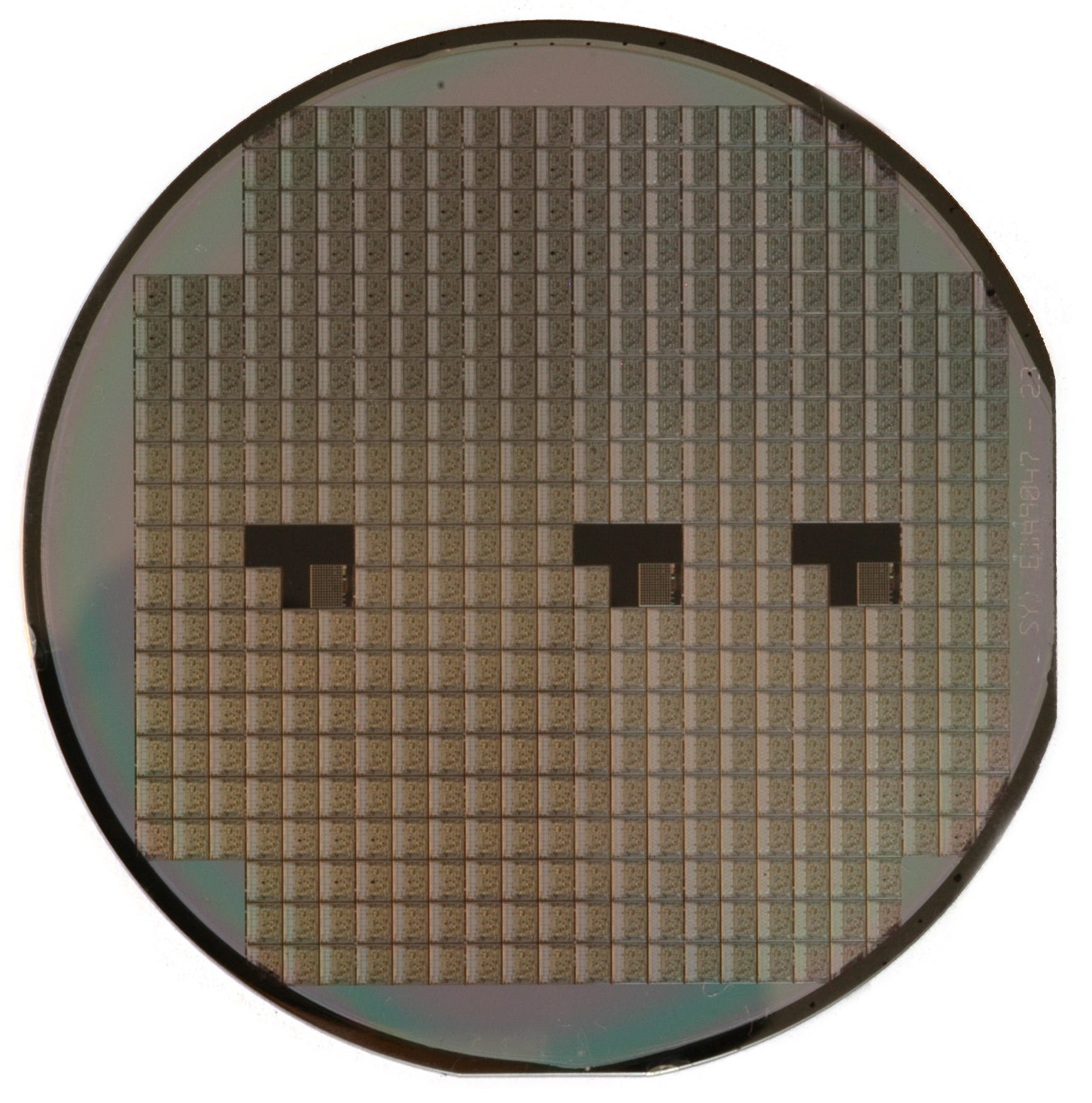
A processed silicon wafer. Turning a hyperscaler’s accelerator design into wafers like this, at TSMC, is the business MediaTek is racing Broadcom and Marvell to win. Image: Wikimedia Commons (Public domain).
There is one engagement here that is not a pitch but a shipped product, and it is the one with NVIDIA. The GB10 Grace Blackwell Superchip inside NVIDIA’s DGX Spark desktop AI machine was, in NVIDIA’s own words, co-designed by MediaTek. The press release is specific about the scope: the GB10 draws on “MediaTek’s experience in designing power-efficient and high-performance CPU, memory subsystem, and high-speed interfaces to power the Grace 20-core Arm CPU.” The machine delivers a petaflop of AI compute with 128 gigabytes of unified memory, and MediaTek’s Vince Hu, who runs the data-center group, got a quote on the release about ushering in the next era of AI prototyping. MediaTek did real, hard, data-center silicon, on a part with NVIDIA’s name on the box, and NVIDIA let it say so.
The same pairing produced the N1 and N1X, the first NVIDIA-MediaTek PC processors for Windows on Arm, built on TSMC 3-nanometer, pairing a 20-core Arm CPU with a Blackwell GPU carrying 6,144 CUDA cores, performance in the class of an RTX 5070. Jensen Huang has said the N1 is essentially the same silicon as the GB10, and he is unveiling the N1X at GTC Taipei as this publishes, with first devices from Dell, Lenovo, Asus, and MSI expected before the holidays. That program has slipped more than once, from the second half of 2025 into 2026, but it is real and it is confirmed. MediaTek is also a named NVLink Fusion partner, building custom silicon that plugs into NVIDIA’s rack-scale interconnect, the differentiators cited being exactly the SerDes, optical I/O, and die-to-die interconnect IP the ASIC business runs on. The computing line that holds the GB10 work grew more than 80 percent in 2025 to about US$1 billion. That is the confirmed column, and it is real.
Then there is Google, which is most of the bull case and none of the press releases. MediaTek is reported to be designing parts of Google’s next-generation TPU, the v7e variant codenamed Ironwood, the cost-optimized version meant to run inference cheaply rather than train the biggest models. The reported scope is precise and worth holding onto: MediaTek does the input/output die, the high-speed SerDes interfaces, the peripheral integration, and acts as a liaison to TSMC for the build. Broadcom keeps the lead role and the training-class chips. Google keeps the architecture, the part that does the computing, the reason a TPU is a TPU. The cost variant is reported to run 20 to 30 percent cheaper per chip, which is the whole point of bringing in a consumer-silicon house. UBS is reported to size the Google opportunity for MediaTek at around US$4 billion, and supply-chain trackers say Google’s CoWoS bookings tied to the part are ramping hard, from roughly ten thousand wafers toward twenty thousand for 2026 and possibly far more beyond. That is the rumored column, and it is the one the stock is paying for.
The numbers management has put around all of this have moved in one direction, fast. On the October 2025 call, Tsai targeted US$1 billion of cloud-ASIC revenue in 2026 and “multiple billions” in 2027, against a roughly US$50 billion addressable market, aiming for 10 to 15 percent of it. By April 2026 the 2026 number had doubled to about US$2 billion, the bulk of it landing in the fourth quarter, the addressable market had grown to US$70 to 80 billion by 2027, and a second customer program was targeted for mass production by the end of 2027.
In October the number was one billion. By April it was two.
The target doubled before a single one of these chips shipped at volume. That tells you the demand the company sees is real. It also tells you the number is a forecast, and forecasts on unconfirmed customers carry a base rate that the price is ignoring.
Confirmed versus rumored
Here is the section the whole piece exists for. Put the data-center story in two columns and look at what holds a press release and what holds a rumor.
The confirmed column is short and solid. NVIDIA’s GB10 is co-designed by MediaTek, on the record, on the wire. The N1 and N1X PC chips are real and launching. MediaTek is a named NVLink Fusion partner. The computing business grew past US$1 billion in 2025. MediaTek completed its first 2-nanometer tape-out at TSMC. Management stated the ASIC revenue targets on earnings calls under its own name. Every one of those is a fact you can cite to a primary source, and together they establish something important: MediaTek can do real data-center silicon, and the most demanding customer in the industry has vouched for it in writing.
The rumored column is long, and it is where the money is. MediaTek designs the I/O die on Google’s TPU. The variant is the v7e, Ironwood. Google doubled the order. The CoWoS allocation is ramping from ten thousand wafers toward twenty thousand and possibly far more. The Google opportunity is worth US$4 billion. There is a second hyperscaler in late-stage talks. There may be an OpenAI edge engagement. Every one of those is sourced to supply-chain reporting, to DigiTimes and TrendForce and The Information and unnamed people familiar with the matter. Not one of them has a Google logo on it.
“Newly-Launched NVIDIA DGX Spark Features GB10 Superchip Co-Designed by MediaTek.”
That is the headline MediaTek was allowed to write. There is no Google headline. There is no Google quote. There is a share price that behaves as if there were both.
It is worth tracing how the Google story grew, because the growth is itself the tell. It began in March 2025 as a Reuters report that Google would use MediaTek for a future TPU, enough to knock Broadcom’s stock that day. Through 2025 it accreted detail from the supply chain: the variant was the cost-optimized v7e, the scope was the I/O and the integration, the CoWoS bookings were rising, a sell-side desk hung a four-billion-dollar number on it. By late November 2025 the stock had its best week in 23 years on Google AI progress, and by late January 2026 it moved 19 percent in two days on a fresh iteration of the same story. At no point across that fifteen-month accretion did Google or MediaTek put a name to it. The story got more specific and more valuable without ever getting confirmed, which is the natural history of a supply-chain narrative the market wants to believe.
The tells that the Google story is still a story, and not yet a fact, are worth being precise about, because they are the difference between a 56-times stock and a 25-times one. First, Google has never named MediaTek as a TPU partner, in any release, any blog, any keynote. A company that announces partnerships with TSMC and Broadcom and a dozen software firms has, for whatever reason, not announced this one. Second, Google’s own descriptions of the TPU program, and the public reference works that track it, credit Broadcom as the co-developer across generations, with no mention of MediaTek. Third, and most concretely, when Google made engineering changes to a later TPU, the v8x, a chip MediaTek is reported to have designed, the tape-out reportedly slipped to around mid-2026, and DigiTimes, no bear, framed it as raising “questions for MediaTek’s growth plans.” A relationship that were already locked and scaling cleanly does not produce that sentence.
None of this means the Google work is fake. Reuters does not invent partnerships, Broadcom’s stock did not fall in March 2025 on nothing, and the CoWoS bookings are a real-world tell that something is being built. The reported column is probably mostly true. The point is narrower and it is entirely about price.
When a business is reported rather than confirmed, you discount it. You haircut the revenue, you widen the range of outcomes, and you demand a margin of safety for the chance that the scope is smaller, the timing later, the margin thinner, or the customer fickler than the rumor says. That is not pessimism, it is arithmetic: an unconfirmed dollar is worth less than a confirmed one because more of the ways it can go wrong are still open. The market has done the opposite. It has taken the reported column, marked it to the most optimistic reading, and paid the highest earnings multiple in the company’s history for it.
This is the same move the market made with Entegris and its addressable-content slide: a number that is real as a possibility gets priced as if it were real as a contract. There, the gap was addressable versus captured. Here it is confirmed versus rumored. The discipline is identical, and so is the conclusion. You do not pay the price of the certain outcome for the uncertain one. Read the gap.
The competition, both fronts
You asked what the competition does and why MediaTek is different, and the honest answer is that MediaTek fights two completely different wars, against two completely different sets of enemies, and it is winning the old one and starting the new one as the underdog.
The old war is smartphone silicon, and there MediaTek is the leader. By units shipped it is number one in the world. Counterpoint’s 2026 estimates put the field like this:
Smartphone SoC vendor2025 share2026E shareMediaTek34.4%~34%Qualcomm25.1%24.7%Apple18.3%18.1%Samsung (Exynos)11.2%12.1%
Source: Counterpoint via wccftech. Apple is captive to its own phones; UNISOC holds most of the remainder at the low end.
MediaTek wins on breadth. It has a part at every price point, from the cheapest entry phone in India to the parity-class flagship, and it owns the enormous middle of the market that the premium vendors do not bother to defend. That breadth is also why its share is the most stable number in the table: when the cycle turns down, the cheap phones keep selling, and MediaTek sells the cheap phones.
Qualcomm is the enemy that matters, and the difference between the two companies is a difference of business model. Qualcomm runs two engines. QCT, the chip business, sells Snapdragon, fewer units than MediaTek but skewed to the premium tier, at a gross margin around 54 percent. QTL, the licensing business, collects a royalty on essentially every 3G, 4G, and 5G phone sold on Earth, MediaTek’s customers and Apple’s included, at margins north of 70 percent. MediaTek has no QTL. It is a pure chip company, and it earns a chip company’s margin, around 46 percent, eight to ten points below Qualcomm’s blended number. That gap is structural, it is the licensing toll plus the premium mix, and it is the single number the ASIC story is implicitly promising to narrow.
Qualcomm is also not standing still on MediaTek’s turf, and it is diversifying off it. It is building an automotive business toward a reported US$6 billion annual run-rate, it has pushed into the PC with Snapdragon X, and it is chasing IoT and edge. At the same time it lost a chunk of its own franchise to insourcing: Apple, long Qualcomm’s largest modem customer, has now brought the modem in-house with the C1 and its successors, and that revenue is leaving Qualcomm over the next few years.

An Apple M1 die. The merchant-silicon bear case in one photograph: the best customers eventually design their own. Image: Fritzchens Fritz, Wikimedia Commons (CC0).
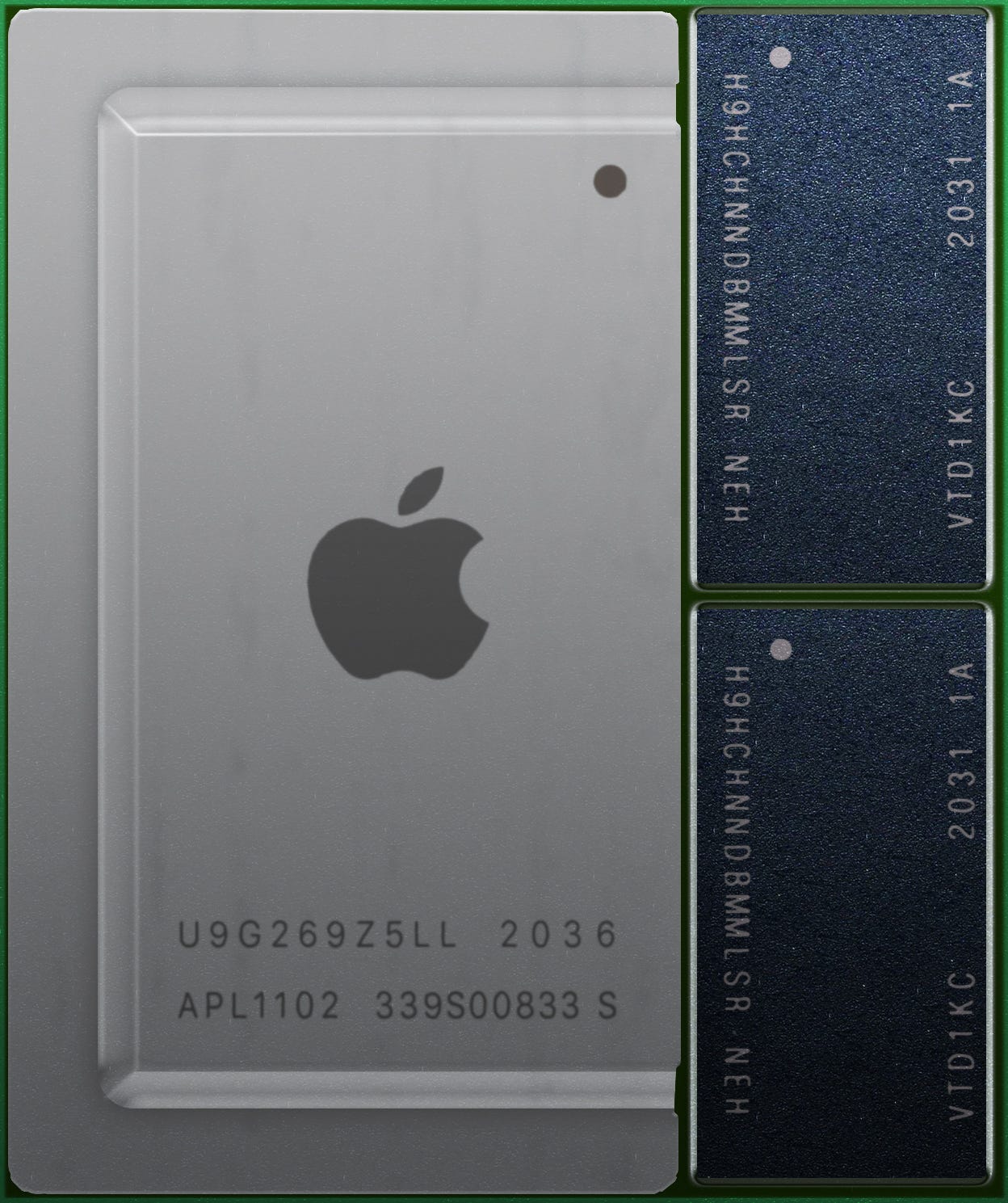
Apple is the cautionary tale for everyone who sells chips to someone else. It designs its own A-series and M-series processors, it has now in-housed the modem, and the lesson generalizes: the best customers, at sufficient scale, eventually build their own silicon. MediaTek’s mid-market is relatively safe from this, because the volume buyers there have no interest in running a chip-design organization, but it bounds the franchise’s ceiling, and it is worth keeping in mind precisely because the ASIC business is MediaTek doing to others what Apple did to Qualcomm: being the design house for somebody who wants their own chip. Samsung sits in both camps, designing its own Exynos and buying MediaTek and Qualcomm for the rest. UNISOC, the Chinese challenger, takes the very bottom of the market and is a reminder that MediaTek has a low-end defending to do even as it climbs.
The one place MediaTek has not finished the job is the very top. The genuine premium tier, the Samsung Galaxy S and its peers in the West, still runs largely on Qualcomm, and MediaTek’s flagship wins have come at the Chinese premium brands, Oppo and Vivo and Xiaomi, where the Dimensity 9000 series and now the 9400 and 9500 have designed in. Parity on the benchmark is necessary but not sufficient. The flagship socket is won on modem performance, on carrier certification, on the software relationship, and on brand, and those take years to turn. MediaTek has the technology to compete for the crown now. Whether it takes the crown is a 2026 and 2027 question, and it is a better question than it has ever been, which is itself the point about how far the company has come.
So in the old war, MediaTek is different because it is the volume-and-breadth leader against a premium-and-licensing incumbent, it has closed the technology gap at the top, and its main structural disadvantage is the margin that the new war is supposed to fix.
The new war is custom ASIC, and there MediaTek is the newcomer walking into a room owned by two giants. Broadcom is the leader of leaders. It co-designs Google’s TPU across generations, it does Meta’s accelerator, and it has public AI-chip customers including OpenAI and ByteDance. Its chief executive, Hock Tan, has told investors the company has “line of sight to achieve AI revenue from chips in excess of $100 billion in 2027.” It is sitting on a US$73 billion AI backlog, and it did US$8.4 billion of AI semiconductor revenue in a single quarter, up 106 percent year over year. Marvell is the clear number two, with Amazon’s Trainium and Microsoft’s Maia, guiding to up to US$11 billion of AI ASIC revenue in 2026. Below them sit the pure-play houses, Alchip and TSMC’s own ASIC arm Global Unichip, that do turnkey designs for customers without the depth to go to Broadcom.
Broadcom’s Hock Tan told investors the company has “line of sight to achieve AI revenue from chips in excess of $100 billion in 2027.”
MediaTek’s line of sight, for the same year, is the multiple-billions it has not yet quantified, built off a 2026 base of about US$2 billion, on a lead relationship the lead customer will not confirm. Both can be growth stories. They are not the same story, and they do not deserve the same multiple. It is worth saying plainly: Broadcom’s $100 billion is contracted backlog and shipping revenue. MediaTek’s $2 billion is mostly a fourth-quarter forecast on one program. The incumbent’s number is more certain and an order of magnitude larger, which is exactly the kind of comparison the MediaTek multiple is not making.
There is one more competitor in the ASIC war that does not appear in the share charts: the customers themselves. Google, Amazon, and Microsoft all run large in-house silicon teams, and the merchant houses do the parts those teams cannot or will not. That is good for MediaTek, because it means there is always outsourced work, and bad for MediaTek, because the most valuable part, the architecture, tends to stay in-house, leaving the merchant to fight over the I/O and the integration. That is exactly the layer MediaTek is reported to occupy on the Google chip, and it is the layer with the most competition and, plausibly, the thinnest margin. The high-value, full-chip, training-class engagements are Broadcom’s, won over a decade of references. The cost-optimized, inference-class, I/O-and-integration work is what a newcomer can win, and it is also what the incumbents are content to cede, because the economics are worse.
Why MediaTek can win share at all, and why the bulls believe it, comes down to the wedge. Broadcom and Marvell came to custom silicon from networking, from a heritage of the highest-speed SerDes and switch chips. MediaTek comes to it from consumer, from twenty years of squeezing performance out of a phone’s power and cost budget, and from being one of TSMC’s largest customers and a first-wave buyer of its 2-nanometer node and its CoWoS packaging. The argument is that for the cost-sensitive inference chips, the v7e-class parts rather than the training monsters, power efficiency and a cheaper design beat raw networking pedigree, and that MediaTek’s reported cost advantage is exactly what a hyperscaler watching its capex wants. That is a coherent thesis. It is also unproven at scale, against incumbents with a decade of references and ninety-five percent of the market, and the rising tide of AI demand lifts Broadcom and Marvell first, by a lot.
The financials, clean versus dirty
Put the company on one page, because the trajectory is an argument the headlines miss.
Fiscal yearRevenue (NT$ millions)Net income (NT$ millions)2021493,415111,4212022548,796118,1412023433,44676,9792024530,586106,3872025595,966106,118
Source: StockAnalysis; FY2025 net income per the company release.
Read the two columns against each other. Revenue went from NT$493 billion in 2021 to a record NT$596 billion in 2025, up about 21 percent across four years. Net income went from NT$111 billion to NT$106 billion. Down. The 2023 line is the smartphone downcycle, the destocking year that hit every chip company, when revenue fell 21 percent and profit fell 35. The recovery since has been real on the top line and absent on the bottom. MediaTek is selling more and keeping less.
Why is the question, and the answer is mix and cost. The mix is getting cheaper at the margin even as the flagship climbs, because the early ASIC revenue is low-margin back-end design work rather than high-margin chip IP, and because the input costs have inflated. The biggest of those is memory: the DRAM price surge that is squeezing the entire device chain raises the cost of the memory MediaTek integrates and packages, and it is set to crimp 2026 unit volumes across the industry. The gross margin tells the story cleanly: from the high-40s toward 46, with management guiding 46 percent plus or minus 1.5 points for the coming quarter. That is eight to ten points below Qualcomm, and it is the number the ASIC story is implicitly promising to fix, because data-center silicon is supposed to carry richer margins than mid-range phone chips. Whether MediaTek’s flavor of data-center silicon, the I/O-die-and-integration flavor rather than the full-chip flavor, actually carries those margins is a question nobody has answered, because the company has not disclosed ASIC margins. File that under things the price assumes.
Put numbers on the squeeze. Gross profit in 2025 was about NT$283 billion on NT$596 billion of revenue, the 47.5 percent margin, while operating income ran near NT$103 billion, which means operating expenses landed on the order of NT$180 billion, most of it research and development. MediaTek spends roughly a fifth to a quarter of revenue on R&D, one of the heaviest ratios among large fabless firms, and that line is rising as the company staffs the data-center effort. So earnings are pressed from both sides at once: a gross margin drifting down on mix and memory cost, and an operating-expense line climbing on the ASIC investment. Record revenue ran into both, and the result was flat profit. The ASIC business is supposed to reverse this, eventually, by adding high-margin revenue on top of spend that is already in the base. Eventually is the word doing the work, and the company has not told you what margin to expect when eventually arrives.
The cycle is worth holding in view too, because it bounds the downside on the legacy business. The 2023 trough, NT$433 billion of revenue and NT$77 billion of net income, is what a bad year looks like for this company: ugly, not existential, and followed by a sharp recovery. Normalized earnings for the legacy business are probably somewhere around the NT$100 billion the company has now printed in three of the last four years. That is the number the sum-of-parts leans on, and it is a reason the legacy half deserves a fair multiple rather than a distressed one. It is not a reason to pay a data-center multiple for it.
The most recent print made the tension concrete. First-quarter 2026, reported April 30: revenue NT$149.2 billion, down 2.7 percent year over year; gross margin 46.3 percent; operating margin about 15.3 percent; net income NT$24.4 billion, down 17.4 percent; earnings per share NT$15.17. Mobile was down 15 percent year over year, Smart Edge up 13. The profit fell on flat-to-lower revenue because the margin and the mix moved against the company, exactly as the annual numbers warned. The second-quarter guide, NT$140 to 149 billion, is flat to down again.
The monthly revenue tape, which Taiwanese companies disclose and which gives you a near-real-time read, says the same thing. The first four months of 2026 ran NT$195.9 billion cumulatively, down about 3 percent year over year, with a record March, NT$63.2 billion, bracketed by a soft February and a soft April. A company in the middle of the greatest AI re-rating in its history is, at the level of actual monthly sales, running slightly behind last year. That is not a crisis. It is the gap between the narrative and the print, stated in the one number that updates every month.
The balance sheet is the clean part, and it is genuinely clean. Net cash above NT$180 billion, almost no debt, and a research-and-development budget that runs around a fifth to a quarter of revenue, among the heaviest in the fabless industry, which is the thing that funded the flagship catch-up and now funds the ASIC push. A company this profitable, this liquid, and this committed to R&D can chase the data center for years without strain, and without diluting shareholders to do it. The strength of the balance sheet is not in question. What is in question is what the market is paying for the part of the company that does not exist yet.
Valuation: what the multiple is paying for
Here is the section the cold open was promising. Take the NT$6.7 trillion enterprise value and split it, the same way I split Soitec and Entegris, because a single multiple on a company that is really two businesses is a single multiple worth interrogating.
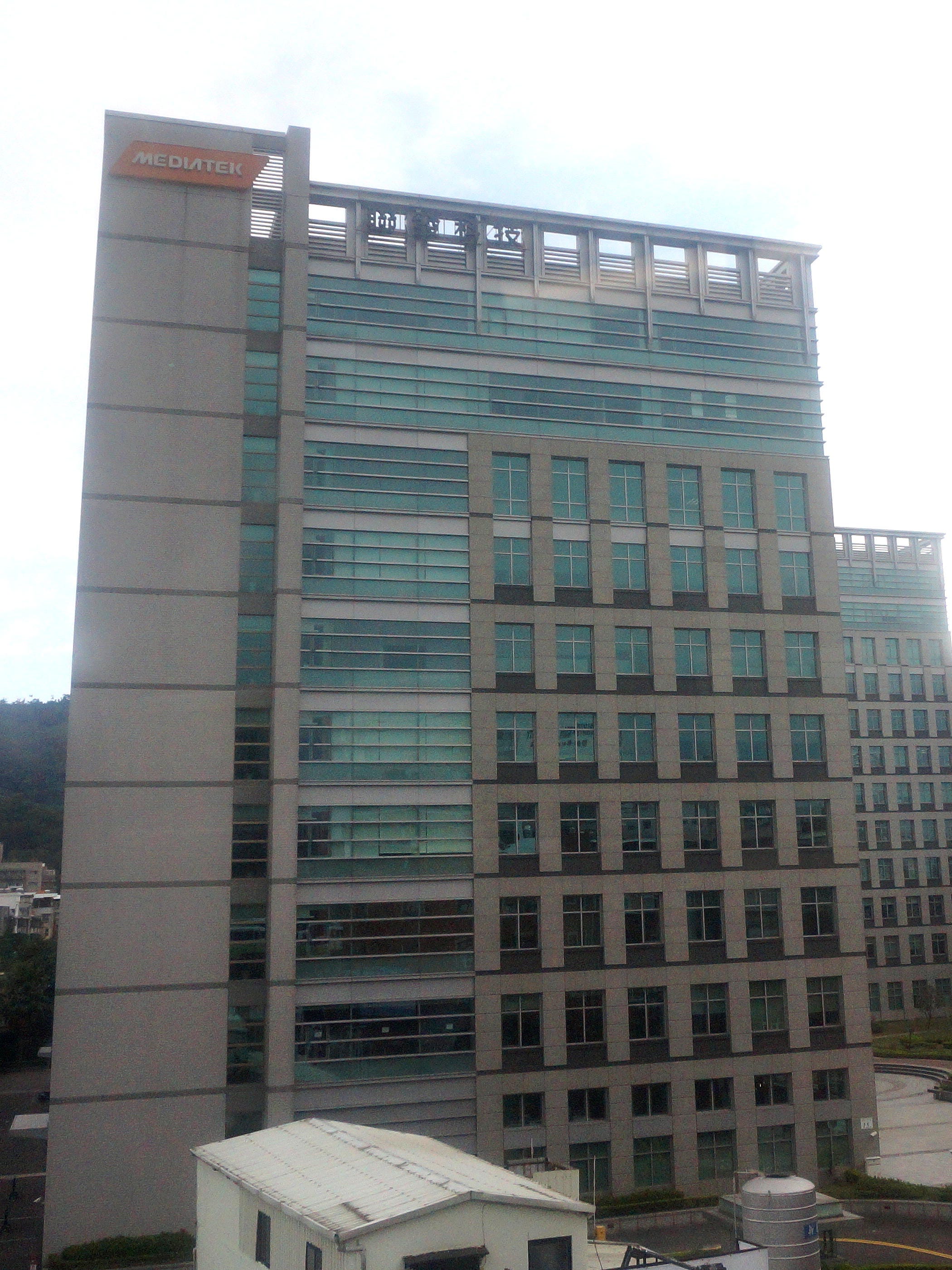
MediaTek in Taipei. The enterprise value the next paragraphs take apart belongs to this company; the question is how much of it belongs to a business that does not exist yet. Image: Wikimedia Commons (CC BY-SA 4.0).
Start with the legacy business, which is almost the whole company today: the smartphone chips, the TV silicon, the connectivity, the Chromebooks, the auto, everything except the cloud ASIC. That business did about NT$596 billion of revenue in 2025 and essentially all of the NT$106 billion of earnings, because the ASIC line was barely a billion dollars of low-margin revenue last year. What multiple does it deserve? It is a good, broad, cyclical semiconductor franchise with a margin below Qualcomm’s and a growth rate in the high single digits. Qualcomm itself trades around 18 to 22 times forward earnings. Give MediaTek’s legacy business the same, call it 18 to 22 times its NT$106 billion, and you get an enterprise value of roughly NT$1.9 to 2.3 trillion. Take the midpoint, NT$2.1 trillion. If anything that is generous, because a chunk of MediaTek’s earnings are more cyclical and lower-margin than Qualcomm’s, but generous is the right way to test a bear case.
Now subtract.
LineValueTotal enterprise value~NT$6.7TLess: legacy business at ~20x its ~NT$106B earnings~NT$2.1TImplied value of the cloud-ASIC business~NT$4.6T
The market is paying about NT$4.6 trillion, roughly US$148 billion, for the cloud-ASIC business. That business is expected to do about US$2 billion of revenue in 2026, the bulk of it in the fourth quarter, which is about NT$62 billion. So the implied multiple on the ASIC business is about 74 times its 2026 revenue. Not earnings. Revenue. On a business whose margins are undisclosed and whose lead customer is unconfirmed.
Run it forward, the generous way, to give the bull every break. Use Goldman’s reported estimate that ASIC revenue reaches US$12.3 billion in 2027, about NT$381 billion, the most optimistic number on the Street. Even on that number, the NT$4.6 trillion the market is paying today is about 12 times 2027 sales. Twelve times sales is a full multiple for a hyper-growth AI-silicon business. The catch is that Goldman’s US$12.3 billion is not a result, it is a model, and the model assumes the rumored relationships convert and scale. So the honest description of the price is this: the market is paying a full sales multiple on the single most optimistic forecast of a business that is mostly still a rumor. You are not buying a margin of safety. You are buying the bull case at the bull’s own number.
Here is the same logic as a scenario table, the ASIC business in 2027 against the current NT$6.7 trillion enterprise value, holding the legacy business flat at NT$2.1 trillion:
Scenario for the ASIC business (2027)ASIC revenueSales multipleASIC EV+ LegacyImplied EVvs current 6.7TRumor fades (v8x slips, no second customer)~US$3B (NT$93B)6x0.6T2.1T2.7T-60%Base (lands roughly as guided)~US$6B (NT$186B)8x1.5T2.1T3.6T-46%Goldman bull (Google confirms and scales)~US$12.3B (NT$381B)12x4.6T2.1T6.7T~0%Euphoria (share gains beat the plan)~US$18B (NT$558B)14x7.8T2.1T9.9T+48%
Author’s estimates. Legacy held flat at NT$2.1T; NT/USD ~31. ASIC margins undisclosed, so this runs on revenue multiples with stated assumptions, not segment earnings.
Read the table honestly, because it is the whole investment case in four rows. You break even, roughly, only in the Goldman-bull row, the one where Google confirms and the ramp scales to twelve billion dollars. In the base case, where the business lands roughly as guided but the rumored upside does not all convert, you lose nearly half. In the fade case, where the v8x slip is a symptom rather than a hiccup and the second customer does not show, you lose sixty percent. You make money only in the euphoria row, where MediaTek beats its own plan against ninety-five-percent-incumbent competition. The distribution is not symmetric, and it is not in your favor. The price has pre-spent the good outcome.
State it per share, because that is how it lands. At a Qualcomm multiple, the legacy business plus the net cash is worth something like NT$1,400 of the NT$4,310 price. The remaining roughly NT$2,900 is the ASIC option. You are paying about NT$1,400 for the company that exists and about NT$2,900 for the company that is reported to exist. The part you can verify in a filing is less than a third of what you pay.
It helps to see the multiple beside its peers, because the re-rate is clearest in a table.
CompanyWhat it isForward P/EMediaTek (2454)Mobile-and-edge chips, plus the ASIC option~56xQualcomm (QCOM)Premium mobile, licensing, automotive~18-22xBroadcom (AVGO)The custom-ASIC leader, contracted AI revenuepremium, on shipping revenueMarvell (MRVL)The custom-ASIC number twopremium, on shipping revenue
MediaTek and Qualcomm forward P/E from the sources above; Broadcom and Marvell carry premium AI multiples on revenue that is contracted and shipping rather than reported.
The point is not the exact figures, which move daily, but the shape. MediaTek trades at roughly three times Qualcomm’s earnings multiple. Some of that gap is deserved, because MediaTek grows faster and has the ASIC optionality Qualcomm lacks. But three times is a wide premium to justify on an ASIC business that is, today, a fraction of the size of the one Qualcomm is building in automotive, and that rests on a customer Qualcomm’s does not. And to the extent MediaTek trades rich against Broadcom and Marvell on the AI story, remember that those two are pricing contracted, shipping AI revenue at scale while MediaTek is pricing a forecast. The one-line summary of the valuation is that MediaTek is paying an AI-leader multiple for an AI-challenger position.
A second cross-check, on the whole company rather than the parts. At NT$4,310 the stock is about 56 times forward earnings. For that multiple to compress to even 30 times, a level that would still be a large premium to the company’s own history and to Qualcomm, on an unchanged price, earnings would have to nearly double from here. Earnings nearly doubling requires the ASIC business to arrive at scale and at a real margin, which is the same bet the sum-of-parts describes, reached from the multiple instead of the EV. Every road in this valuation leads to the same toll booth: you are paying, today, for the ASIC business to become large and profitable, and the largest input to that is a customer relationship the customer will not confirm.
One last cross-check, the bluntest. The sell-side, which loves this stock, rates it Strong Buy almost unanimously, and yet:
Sell-sideStanceTarget (NT$)Street high (unnamed US broker, May 4)Bull~5,000Goldman SachsBuyraised on the ASIC modelMorgan StanleyTop pickcloud-AI thesisConsensus averageStrong Buy~3,300-4,000HSBCHoldcompetition concernsStreet lowBear~1,751
Look at the consensus line. The average target of the analysts who cover this name, after the run, sits below the spot price of NT$4,310. The street-high call, NT$5,000, comes from an unnamed broker whose explicit thesis is that MediaTek graduates from doing the I/O to doing the full compute chip, which is to say the bull case is the rumor getting bigger. The people whose job is to model this company, with access to management, think on average it is worth less than it currently trades. Even the cheerleaders are behind the stock. When that is true after a triple, the burden of proof is not on the skeptic.
The bull case
I have been hard on the price, so let me build the other side properly, because the bull case is not stupid and parts of it I believe.
First, the franchise is genuinely good and genuinely improving. The flagship parity is real, the TV and connectivity and Chromebook leadership are real, and a company that ships the most smartphone chips in the world and owns sixty percent of TVs is not a fragile thing. This is a quality compounder before you add a single dollar of ASIC, and quality compounders in semiconductors have earned premium multiples for good reasons.
Second, the NVIDIA relationship is the strongest possible answer to the bear’s central doubt. The hardest, most demanding customer in the industry chose MediaTek to co-design real data-center silicon and put its name on it. That is not a cost play or a charity. It is a statement that MediaTek’s CPU, memory, and high-speed-interface engineering is good enough for the company that defines the category. If NVIDIA trusts it for the GB10 and the N1X, the skepticism about whether MediaTek can do hard data-center work is misplaced. The GB10 is confirmed, and a confirmed door into the data center is worth a great deal.
Third, the addressable market is real and enormous, and MediaTek’s wedge into it is coherent. AI capex is the largest spending wave the industry has seen, the demand-side names are sold out, and a credible, cheaper, TSMC-intimate alternative to Broadcom and Marvell for the cost-sensitive inference chips is exactly what hyperscalers watching their budgets want. If MediaTek takes even 10 percent of a US$70 billion market at a decent margin, the ASIC business is larger than the entire company is today, and the chief executive who manages the TSMC relationship used to run TSMC.
Fourth, the balance sheet lets MediaTek wait. Net cash, heavy R&D, no dilution risk, no need for the rumor to convert next quarter to survive. It can fund the ramp, miss a milestone, and keep going. Optionality with a fortress behind it is a rare combination.
Fifth, the re-rate has a precedent, and the skeptics on the precedents were often right on valuation and wrong on the stock for years. The market has repriced other names from old-economy multiples to AI multiples ahead of the proof, and the people who called them expensive watched them double. I have been too early on a quality asset before, and being too early on a structural winner is the easy mistake to make. If Google confirms the relationship and the US$2 billion lands in the fourth quarter, the bull was right, and this whole piece reads as a missed entry on a great company.
Sixth, there is a reflexive case the bears underrate. A stock that has tripled, that index and momentum funds must keep buying as it grows, that sits in the most-wanted theme in the market, can stay expensive far longer than a sum-of-parts says it should. The trading curb in May was a symptom of demand as much as of mania. As long as the AI-capex narrative holds and the prints do not break, the marginal buyer keeps arriving, and being short the marginal buyer in a theme like this is how careers end. None of that makes the valuation right. It makes the timing of any de-rate genuinely uncertain, which is itself a reason not to be short.
That is a real case. If the rumor is confirmed and the ramp scales, MediaTek grows into the multiple and the stock works from here.
The bear case
And here is why I am still reading the gap rather than paying the price, each pressure carrying the thing that would change my mind.
First, the central one: the story is reported, not confirmed, and the price treats it as confirmed. The kill is binary and public. If Google names MediaTek as a TPU partner, or the US$2 billion of ASIC revenue actually lands in the fourth quarter of 2026, the rumored column becomes the confirmed column and the bear loses this leg. Until then, the v8x tape-out slip is the kind of detail that shows up before a disappointment, not before a beat.
Second, the margin is unproven where it matters most. The whole point of the ASIC story is that data-center silicon fixes MediaTek’s structural margin gap to Qualcomm. But MediaTek’s reported role is the lower-value I/O-and-integration work, not the high-margin full-chip IP, and the company has disclosed no ASIC margins at all. It is entirely possible to grow ASIC revenue to several billion dollars and barely move group earnings, if that revenue comes in at a margin well below the corporate average. The kill is disclosure: a gross margin on the data-center business that actually beats the corporate average, or a corporate gross margin that visibly expands as ASIC scales.
Third, the core is cyclical and soft right now. Mobile is most of the company, it is exposed to China and to the smartphone cycle, and it just printed down 15 percent year over year with profit down 17, squeezed by memory costs, with the monthly tape running slightly behind last year. The kill is a mobile business that turns up year over year, which would show the soft patch was cyclical rather than structural.
Fourth, the concentration is extreme. The entire 2026 ASIC ramp rests on one hyperscaler, and the second customer’s revenue is not expected until the end of 2027. One program, one customer, one engineering change away from the number. The kill is a second customer reaching real revenue, which would turn a single bet into a business.
Fifth, and simplest, the price. Sixty-eight times trailing earnings, the most this company has ever cost, after a triple, on a mania the exchange had to curb. Even the good outcome is roughly priced in, and the great outcome is what you are paying for. The kill here is mechanical and it is the house rule across every premium name I have written up: if the stock runs further on no new confirmation and the multiple stretches further from the fundamentals, the risk-reward gets worse, not better, and the discipline is to stay out, not to chase.
The variant view at NT$4,310, with kill criteria and what to watch
So where does that leave you, concretely.
This is a read-the-gap piece, not a short. I am not long here and I would not be a buyer at NT$4,310, because the price has already underwritten the outcome I would need to underwrite myself to own it, and a sum-of-parts that pays you back only if Google confirms and the ramp scales to twelve billion dollars is not a setup with a margin of safety. It is a momentum setup wearing a monopoly’s clothes, the same shape as so many AI-infrastructure names, and the entry price is doing none of the work for you.
But I would not naked-short it either, and I want to be clear about why, because the temptation is obvious. You do not short a company with a confirmed NVIDIA design win, net cash, the world’s largest smartphone-chip franchise, and a genuine wedge into the biggest capex wave in the industry’s history, into a tape that has tripled and an exchange that had to curb it. The borrow against that narrative is a great way to be right on valuation and carried out on momentum. The lesson of every parabolic AI name is that expensive is not a catalyst.
What I would actually do. I would wait for the gap to close in one direction. The thing that makes me a buyer is confirmation: Google naming MediaTek, or the US$2 billion of ASIC revenue printing in the fourth quarter, or a second customer reaching real revenue, or the gross margin expanding as the data-center business scales, or the mobile business turning up. Any two of those and the rumored column is becoming the confirmed column, and the multiple, while still rich, would be resting on facts instead of forecasts, and a quality franchise resting on facts is a thing you can pay up for. For the reader who wants a construct rather than a watch list, the cleaner expression than shorting MediaTek outright is to own the confirmed version of the same theme against the rumored one: long Broadcom or the demand-side names that already hold the contracts, paired against a small MediaTek short sized to the premium rather than the company. Size it small. The thesis is that the gap closes, not that the company fails.
Six dated kill criteria, the things that would move me off the sidelines in either direction:
#TriggerRead1Google names MediaTek in the TPU programRumored becomes confirmed; turn buyer2The ~US$2B ASIC revenue lands in Q4 2026Forecast becomes fact; turn buyer3A second hyperscaler reaches real ASIC revenueConcentration becomes a platform; turn buyer4Group gross margin expands as ASIC scalesThe margin assumption is validated; turn buyer5TPU v8x slips again, or the second customer slipsThe fade row of the table; stay out or press the pair6The multiple stretches further on no new confirmationRisk-reward worse, not better; stay out
Six things to watch, each with a date or a trigger:
GTC Taipei and the N1X, June 1, 2026. Jensen Huang unveils the MediaTek-built N1X PC chip as this publishes. It is the confirmed column getting louder. Watch whether the NVIDIA relationship deepens beyond the GB10, and watch whether the market starts conflating the confirmed NVIDIA work with the unconfirmed Google work, which is the behavior that has driven the stock.
The second-quarter print, late July. Mobile year over year is the structural-versus-cyclical tell. Gross margin is the mix tell. Any ASIC color is the confirmation tell.
The fourth quarter of 2026. This is the big one. The bulk of the US$2 billion of ASIC revenue is supposed to land here. If it does, the bear’s central leg is gone. If it slips, the fade row of the scenario table is the one that matters.
Google. Any official acknowledgment of MediaTek in the TPU program re-rates the stock on confirmation. Continued silence, especially alongside more v8x-style engineering slips, does the opposite.
The v8x tape-out, around mid-2026. A clean tape-out is a quiet confirmation. Another slip is a loud question.
The second hyperscaler. A named second customer reaching revenue turns one bet into a business and is the difference between concentration risk and a platform.
I/O is the part of a chip that talks to the rest of the world. The processor does the thinking. The input and the output move the data in and out. On Google’s accelerator, MediaTek is reported to design the part that talks, not the part that thinks.
The market has bought the whole chip. At sixty-eight times earnings, the most this company has ever cost, MediaTek is priced as if the processor were already its own, as if Google had already signed the sentence it has so far refused to write, as if two billion dollars of mostly-fourth-quarter revenue on one customer were already twelve.
Maybe it gets there. The franchise is real, the NVIDIA win is real, the balance sheet is clean, and the cost wedge into the data center is a genuine one. None of that is the question.
The question is what you are paying today for a sentence that does not yet exist. The next four prints, starting with the one in late July, are when the I/O either becomes the chip, or stays the I/O.